Blog

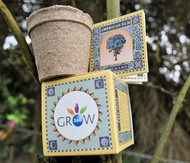
Costco Connection features Tree In A Box

Costco Connections Article on Tree In A Box

Costco Connections Article

Tree In  A Box has been featured in Costco’s national magazine for Earth Day / Arbor Day!   This goes to millions of Costco customers nationwide!  Tree In A Box is also perfect for Easter: a great alternate to all that candy, and Mother’s day: give her a beautiful way to leave a legacy for generations to come.   link: http://bit.ly/eHlyHV


Date Added: March 31, 2011 | Comments Off | Filed under: Uncategorized — treeinabox @ 10:27 am


Douglas Fir

Douglas Fir
Pseudotsuga taxifolia glauca

Growing to 330′ tall, the Douglas Fir is one of the largest trees. The Fir was the first Christmas tree because its great height was thought to bring clear vision in the face of the New Year. With dark blue-green needles and a broad, full shape, this tree will grow in all the U.S. except the Deep South coasts.

By its others names of Douglas Spruce, Douglas Yew and Oregon Pine, one begins to realize what a botanical puzzle this tree has been. The Douglas Fir is actually neither Spruce, Yew nor Pine and was given the Greek name Pseudo-tsuga describing it as a “false hemlock with a yew-like leaf”. It was first “discovered” on Vancouver Island By Dr. Archibald Menzies in 1791, and rediscovered in 1827 by the Scottish botanist, David Douglas. Douglas sent seeds back to the British Isles where they were widely planted and given his name.

Part of the Pine Family, (which includes Pines, Firs, Spruce, Cedars, and other conifers), the Douglas Fir is second only to the Giant Sequoia as the largest tree, growing 80-325′ tall, with trunk diameters of 2-17′. It is a very straight evergreen with upward growing branches that can become slightly droopy with age. It has a dense crown with a conical shape & short blue-green needles (3/4 – 1 1/4″). Its cones are narrow and egg-shaped with scaly seed leaves.

The Douglas Fir is one of the most important timber species in the world, being a very strong wood, and it is the biggest timber producer in the United States. It is a popular Christmas Tree and ornamental and is widely used in reforestation and windbreak plantings. Wildlife feed off its foliage and seeds.

Natural Habitat of the Douglas Fir: There are two main varieties of this tree. The coastal variety forms vast forests in the moist well-drained soils from British Columbia to Central California. The Rocky Mountain variety is a hardier tree growing in drier, rockier soils ranging from Canada to Mexico. Elevation: 0′ to 11,000′. As little as 15″ of rain per year to 100″ of rain. Adaptable to all but the most swampy soils. High resistance to cold. Moderate resistance to drought.

http://www.treeinabox.com/douglas-fir.htm


Date Added: February 17, 2011 | Comments Off | Filed under: Uncategorized — treeinabox @ 12:45 pm


Dawn Redwood

Dawn Redwood

Dawn Redwood
Metasequoia glyptostroboides

First called a “fossil tree” because it was believed extinct, this fast growing tree is now a favorite ornamental. A deciduous conifer, it has a full pyramidal shape, grows to 120′ high and turns a bright copper color in the fall. Will grow throughout the U.S. with adequate water.


Date Added: January 25, 2011 | Comments Off | Filed under: Uncategorized — treeinabox @ 9:55 am


Tree Favors in an Elegant Wedding

Wedding favor tree in elegant setting

Elegant Use of Tree In A Box as wedding favor

Tree In A Box can be used in an elegant setting as well as an outdoor one. Use tulle and ribbon, a white cake box, or colored tissue and happy tape…


Date Added: January 20, 2011 | Comments (4) | Filed under: Uncategorized — treeinabox @ 2:10 pm


National Arbor Day, April 29th, 2011

American Elm

American Elms

Arbor Day  is a nationally celebrated tree occasion with a long and glorious history. National Arbor Day is recognised in all 50 U.S. states and is a special tree day that promotes and honors tree planting and tree care. The National Arbor Day Foundation encourages and supports the celebration of Arbor Day.


Date Added: | Comments (1) | Filed under: Uncategorized — treeinabox @ 1:52 pm


Amsterdam’s Bike Culture

Out of the top 10 bike cities in the world, what city do you imagine is first? After visiting Amsterdam last weekend, I am not surprised that it is rated number one, with Portland following just behind in second. Amsterdam is home to the famous Amsterdam Bike Ramp next to Central Station, which holds over 7000 bikes for commuters to park while they travel by train. With a population around 760,000 habitants, there are around 600,000 resident owned bikes in the city. With a statistic like this, it is no wonder that 40% of Amsterdam’s traffic is created by bicycles.

The transportation infrastructure of Amsterdam is absolutely astonishing. If one were to add up all the cycling paths, it would total a length of around 400 kilometers. Considering that bike lanes connect the entire city, cyclists are well respected on the roads; which makes cycling an efficient, healthy and environmentally friendly way for anyone to get around. Plus, for tourists, there are over 140 bike shops, which either provide tours or rent bikes for as little as 8 Euros a day.

Just as all types of people ride bikes, all types of clothing are worn while riding. During the winter, cyclists bundle up in hats and scarves to overcome the wind. In the rain, people simply ride one-handedly, holding an open umbrella in the other. This past weekend I saw a man in a penguin suit, women in high heels and short skirts, and even a woman in a long fur coat riding unperturbed by the possibility of being splattered by mud. Frequently, parents pack multiple children on a bike with them, riding older kids on the handlebars or in a large industrial basket that is connected to the front of their bikes. Plus, as some people listen to their Ipods or chat on cell phones while pedaling, it seems to be the responsibility of pedestrians to get out of the way of all cyclists.

Considering that anthropologists say that the most important facets of a society are the ones that people give no reason for doing but feel are simply part of their makeup within the group. When asking a local male bicyclist in Vondel Park about why biking is so popular, he responded, “I don’t believe we think much about biking or not biking. It’s not a decision for us; it’s part of our heritage. I grew up riding my bike everywhere and I don’t know any better!”


Date Added: November 16, 2010 | Comments Off | Filed under: Carbon Offset,Current Events,Uncategorized — Tags: , , , — treeinabox @ 4:19 am


Difference in Recycling


Coinciding with the week before last, this blog was also sparked because of the ongoing strikes and protesting in France. Who knew how quickly a beautiful city could turn ugly? Yet again, how many people think about garbage collection going on strike. As overfilled trashcans, some burnt from protesters, and a disarray of litter began to fill the streets, something struck my interest. Not only was I becoming disgusted by the smell and the repulsive site, I was also becoming outraged as I realize how little the people of Nantes really recycle. Don’t get me wrong; I know I am spoiled coming for Portland, where the average amount of recycling is typically at least twice as much as one’s household trash. Yet, why is it that the people of Nantes have less concern for one of the most useful ways of saving our trees and the environment? Why is it that this environmental push is dominant in certain cities of the world and not others?

First off, I think it has to do with the type of culture one resides within. Portland is a young city, founded in 1843, with a very eclectic and open-minded population. Portland is constantly bustling with new innovations and attracting people with naturalistic ideals. On the other hand, Nantes is a historical city, founded in 56 ad J.C.and seems to have stayed true to its historical personality.  As my host farther, Allan Cauet, stated, “the people of Nantes have been around for many generations. There is a very slow process of change in this city.” Perhaps this old-fashioned mentality is what is preventing them from moving forward.

Secondly, the government has quite a bit of control. Within Nantes, there is one recycling collection solely for paper items, a minimal amount of plastics and sometimes yard debris. For certain aluminum and glass, which might I remind there is a lot of because of the wine consumption, one must take one’s own recycling to inconvenient collection points around the city. Considering this is a nuisance for the citizens, naturally this leads to less of a collective effort to separate their waste and recycling.

Even though in 2006 about 250,000 tons of plastic bottles were recycled in France; this seems fairly small based on the fact that France creates about 426 million tonsof trash each year.  What Nantes does accept as recycling, is insignificant in comparison to Portland. For example, although the French are the number one consumers of yogurt in the world, the yogurt containers are non-recyclable; meaning an average household throws away around 1,500 contains a year.

So, what should be done? As you have witness lately in world news, protesting seems to be a national sport here in France; I suggest there should be an organized effort to educate the French society on the importance of recycling. It takes over 700 years to decompose a plastic water bottle that is thrown into the garbage rather than recycling. Nantes, as well as the rest of France, needs to get on the bandwagon of making an effort  to change the way they live to save this earth.

If interested in more about ideas and recycling check out:

http://thegogreenblog.com/a-guide-to-recycling-codes-on-plastic-containers/

http://www.thedailygreen.com/living-green/blogs/recycling-design-technology/recycling-old-bottles-460309

http://www.examiner.com/green-living-in-portland/green-living-101-where-can-i-recycle-plastics-portland


Date Added: November 8, 2010 | Comments Off | Filed under: Carbon Offset,Current Events — Tags: , , , — treeinabox @ 4:36 pm


Quickest Way to Make a Country go Green

FRANCE-FINANCE-ECONOMY-POLITICS-PENSIONS-STRIKE

Some say laws need to be passed to force people to consume less gasoline, others say we need to continue to prove the detrimental effects of CO2 emissions and others say we just need to wait till our older generations pass on. Yet, within less than a week, over 3,700 gas stations in France closed down forcing people to choose other methods of transportation without too much complaint.

No Gas !

No Gas !

How and why you might ask? Well, as I imagine many of our readers have heard, France is dealing with intense protesting against a new retirement reform. The protest is against the government’s decisions to push back the retirement age by two years. Considering that France wouldn’t be the country it is today if it’s citizens did not take to the streets in the past, it is astonishing how accepting the French are of the inconvenience the protesting causes.

As stated by Allan Cauet, a resident of Nantes, “While around 15% of the French population is participating in the protesting and strikes, this small group has still drastically impacted the daily lives of all French citizens. “ Although, the panic buying was blamed for a 50% increase in fuel sales last week, this week a representative of Exxon Mobil stated that the impact of the blockage was climbing to a “critical crisis.” The question is, is that “critical” for the gas mongrels or for the general population?

Considering that an average Renault (an European car) produces an average C02 output of 169.5/km, the lack of petroleum has radically lowered the CO2 output in France in the past week. Instead of depending on one’s car, people are comfortable to take the city transportation, to ride their bike or to even walk over an hour to get to their desired destinations.

Coming from the environmentally progressive city of Portland, I was still extremely surprised to realize how lavishly a majority of Portlanders use their cars. Instead, I think it is time we learn some abstract lessons from the French Protest mentality.  First off, mankind as a whole needs to be more accepting of others; and secondly, we need to acknowledge that we need to look at the larger picture rather than just the personal convenience of our own cars.

Everyday that the protests and strikes continue is another day that people are not excessively wasting gasoline and emitting more toxic CO2 into our atmosphere.  Francoise Michelle, a 55-year-old Marseille resident very simply stated for Insurance Journal, “Transport, the rubbish, the nurses, the teachers, the workers, the white collar, everyone who works, we should all be united. If there is no transport today, we’re not all going to die from it.”

Even though people all over the world live as though it would be the end of the world if there was no individual means of transportation tomorrow, I believe it’s time we find a way to think communally about how our actions will impact this world as a whole


Date Added: October 29, 2010 | Comments Off | Filed under: Carbon Offset,Current Events,Uncategorized — Tags: , , — treeinabox @ 7:42 pm


Trees and a Park in Nates France

Clouds over Nantes

Clouds over Nantes

I Arrived in Nantes late on a Tuesday evening, and not much of the “landscape” could be seen.  A thin cloud cover blocked the moon from lighting up the sleeping city.

Although the city seemed asleep, when the front door of my host family’s house opened, a rush of joyous energy came bursting out. My host mother warmly welcomed me, and I instantaneously knew I had fallen into a vibrant and “open” family.  The slight nervousness I had been feeling in the pit of my stomach disappeared and a sense of excitement replaced it.

What would I discover within the next few days? What hidden mysteries do France and the city of Nantes hold for me? What places in Nantes would I come to deeply appreciate for one reason or another?

This last question was answered the next morning as I slipped on my Mizuno Tennis shoes for an explorative run! Little did I know, my house is located less than 5 minutes, from one of the most well known parks in Nantes. Le Grand-Blottereau, was built between 1742 and 1747 by a ship owner named Thomas Dobree. Upon his death Dobree left the Grand Blottereau Park to the city.

After the appeal of Grand Blottereau’s convenient location, I fell in love with many other aspects of this beautiful park. I recognized the uniqueness of the exotic and tropical tree species such as eucalyptus, pomegranate, olive trees and mimosas. The park actually represents 5 different cultural and environmental regions of the world: a banana forest, a Korean garden, an American Bayou, a Mediterranean Rock Garden, and a French Garden. The French Garden, mindful of architectural propriety, is located directly in front of the chateau.

Two Tropical Greenhouses also sit in front of the chateau. They house France’s only collection of commercially grown exotic plants such as: cotton, rice, cocoa, coffee and mahogany. Thanks to SEVE, Nante’s Parks & Gardens and Environmental Department and their large nursery located within the “Grand Blottereau” grounds, one can also find areas, throughout the park, devoted to lemon, tangerine and grapefruit trees- as well as hot peppers, asparagus, peas and peanut plants.

Since the middle of September I’ve visited the park almost daily. Each time I discover another hidden gem. Whether it is coming across two children playing hide and seek within the miniature tropical jungles or finding a veiled bench next to the American Bayou where I can enjoy a freshly baked almond croissant on an early Sunday morning, I continue to find this park unforgettable.  I find tropical plants I’ve never seen before and  discover clandestine paths through seemingly little trod paths.  I am in awe of this park and the significant work that is put into its upkeep.

There is much history to this park since its gifting to the city by Mr. Dobree. After[K1] World War II it was used to host those who had lost their homes during the war. In 1905 “Le Grand-Blottereau” was adopted by SEVE, who focuses on studying, conceptualizing, realizing and discussing the collections of all municipal green spaces in Nantes.  The Grand Blottereau also a houses several small educational facilities: “The Great Blottereau” horticultural High School, the Jules Rieffel High School and CFA’s “green education center of the city of Nantes[K2] .”

Cultural, Educational, Green, Peaceful… : A space far away from the neighboring world of civilization’s emerging and transformation machinations.  A blessing, once again, full of trees.


Date Added: October 19, 2010 | Comments Off | Filed under: Carbon Offset,Facts about Trees,Uncategorized — Tags: , , , — treeinabox @ 12:39 pm


Cinque Terre Italy and the Shade of a Native Tree

Italian Riviera

Cinque Terre on the Italian Riviera

I stepped from the sweltering August heat into the shade of a native tree and my breath deepened, my shoulders relaxed and my eyes swept from the ground to the view.  I was on a hillside of Cinque Terre, Italy, on the Italian Riviera.  Below me vivid, multi-coloured rooftops were tucked between stone cliffs, lush and verdant olive and grape yards tumbled over stone terraces and colourful boats floated on a truly azure sea.  Here AZURE is a real colour and verdant connotes a saturated smell as well as many shades of green.

Cinque Terre verdant Hills and Azure seas

Who of my readers has heard of Cinque Terre, Italy

Translated as “Five Lands” it is a set of five hamlets. These small towns are without cars or moderninity. They cling to the cliffs and extend into the sea.  It is a rugged portion of the Liguria Region of Italy (North Atlantic coast, just under the top lip of the boot) where people from all over the world traverse the cliffs to explore one of Mother Earth’s most beautiful landscapes. I felt a serene connection with the nature around me and a true sense of accomplishment when I finished scaling the mountainside. The 10 km hike between all 5 cities, takes approximately 5 hours; a little more if you sit at a café in one and sun on a jutting rock in another…

Cinque Terre restaurant and sun on the rocks

Dallying between Hikes

A student, just out of university, I was forced (by the fortunate adjunct of good professors and mentors) to think in scientific method about how the shade of the tree changed the average temperature between direct sun and shadow. So many variables: type of thermometer, time of year, time of day, wind…  For me on this day, it seemed in the range of 15 degrees, and it was the shade of the tree on a hot day that focused my attention… 

Trees in Cinque terre

A sense of peace, of appreciation, of grandeur enveloped me like the oxygen I swear I could sense coming from the cool shadow.  In my awareness, I noted not only the landscape but the sound of multiple human languages, the feel of heavy salt air, the smell of fish and fresh cooked pasta, even up here. It was there, I noted that this environment; one very man-made but so organic in its situation and respect for itself, gave me a tangible respect for life.

The entire coastline, including the cities, are part of the Cinque Terre National Park and it is a United Nations Educational, Scientific and Cultural Organization World Heritage Site. The WHS catalogues, names and conserves sites of outstanding cultural or natural importance to the common heritage of humanity. As of 2010, 911 sites have been listed and coincidentally, Italy is home to the greatest number of World Heritage Sites. It was in 1997 that UNESCO cited Cinque Terre because of its physical significance.

Travelling by train and exploring on foot, I have traversed five countries and dozens of cities, monuments, museums and beautiful landscapes in the last month.  I’ll be reporting here on my many adventures and how trees, the environment and its people combine to generate an experience that encourages our caring for this earth.

Written by, Adrienne Carlson (edited by, Kristine Akins)

Date Added: September 30, 2010 | Comments Off | Filed under: Facts about Trees,Uncategorized — treeinabox @ 12:53 am


Tree Boats

Hammock in a tree

Tree Boat is a Hammock in a Tree

I found the most amazing idea! Totally simple. Yet life changing!

Called a Tree Boat, it is nothing more in concept than a simple hammock, but perched high in a tree canopy, preferably beyond view of the ground, and if in certain trees, without view of the sky.

Imagine lying among the leaves of a living, breathing, moving tree. The life of birds and insects, perhaps squirrels or if in the right locale, monkeys or cats surrounds you as you become part of an environment we often forget exists right in our midst.

Strapped in and stable, though moving with the wind, you become part of a world that will remind you that humanity is not alone as a life force; that an intricate matrix of life exists and that the humble tree is host and enabler of a system of vast proportions.

Check out high-tech versions of Tree Boats here: http://bit.ly/bbIofF

 “We must all hang together, or assuredly we shall all hang separately.” – Ben Franklin


Date Added: August 24, 2010 | Comments Off | Filed under: Tree Houses — treeinabox @ 10:37 am


Letter from an old hand to a new bride

Wedding Couple on a Horse

Chelsea & Charlie Riding a Horse in Wedding Attire

Dear Chelsea and Charlie,

You asked about advice and thoughts about marriage as you begin your new adventure.  With 28 years of marriage under my belt (and Art’s), I’d say 2 things have made a difference in our lives: may you know them immediately and not have to learn them:      LOVE, Aunt Kris

  1. Love self-multiplies. Give 100% of your Love to each other. You can give 100% of your Love to your spouse and still have 100% left over for your children and 100% for your parents and brother and sister and even 100% for every friend and all of humanity.

Letting that Love be unconditional is NOT hard – bringing to consciousness that this is the solution is sometimes illusive…

  1. Know that each of you can be your very best only when you allow the other to be themselves. Though it may not seem like it in this blush of new Love, you will get wildly angry at each other once in a while and wish they didn’t have that irritating trait. YET, you can still Love them 100% and that Love will correct your own error in perception that is making this a problem. 

No force can do that but Love.

Simply Love them all-out in the guise of “may they be the best they can be.”

I remember an interview with Billy Graham’s wife: asked if in some 70 years of marriage she had ever contemplated divorce, she replied “Divorce no, Murder, yes”.  FUN!

Also, the “ancient” movie “Love Story” had a famously disputed quote that said “Love means never having to say you’re sorry”.  From a temporal view this seems ridiculous, we must forgive and we must understand when we need to be apologetic, BUT in this movie, as often in life, it was Love that made the declaration and Love that did not need the declaration, because in True Love there is no error, only a perception of error that, overlooked, becomes truly forgiven, not just a memory that one is willing to sacrificially forgive.

If in the face of an urge to fight you just LAUGH – you’ll never imagine how fast anger can subside…

May your life together be all the adventure you hope it can be.

Collage of horse and lake with wedding couple

Fabulous Photos by: www.davidlinderphoto.com


Date Added: August 10, 2010 | Comments (3) | Filed under: Party Favors,Weddings — treeinabox @ 12:21 pm


Older Posts »

Recent Posts


Categories